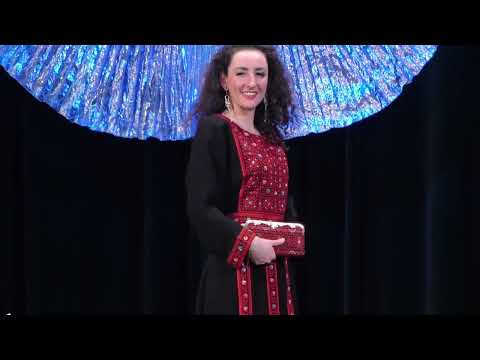
Heritage is not only about old stones, monuments, or museum labels. For Palestine, heritage is also about survival. It is the story of cities, villages, terraces, churches, mosques, monasteries, soap factories, embroidered dresses, dance circles, oral stories, food practices, markets, water channels, olive groves, and family memories that continue to carry identity across generations.
UNESCO recognition matters because it places Palestinian places and practices inside a global cultural framework. A World Heritage site becomes more than a local landmark. It becomes a protected record of human history. An intangible heritage element becomes more than a tradition. It becomes a living practice that communities identify, transmit, and defend.
This article is designed as a major archive page. It introduces Palestine’s UNESCO World Heritage properties, explains the importance of living heritage, gives each major site its own detailed section, and includes visual cards, external video cards, and references. It can later become a foundation for many future article pages.
The most important idea is simple: Palestinian heritage is not frozen in the past. It is alive. It is practiced in homes, fields, streets, weddings, workshops, religious spaces, kitchens, schools, and community gatherings. It is carried by people as much as it is preserved by buildings. That is why this article treats archaeology, architecture, craft, oral memory, agriculture, and cultural performance as parts of one larger story.
Bethlehem: pilgrimage, sacred geography, and living city memory
Bethlehem is one of Palestine’s most globally recognized heritage cities. Its World Heritage listing centers on the Birthplace of Jesus, the Church of the Nativity, and the Pilgrimage Route. For Christians around the world, Bethlehem is connected to one of the most important sacred stories in human history. For Palestinians, it is also a living city with families, neighborhoods, schools, workshops, local traditions, festivals, and the daily complexity of modern life.
A serious archive should avoid treating Bethlehem only as a postcard. Its religious importance is central, but it is not the only part of the story. Bethlehem is also a Palestinian urban place shaped by tourism, craft production, local economy, political geography, religious communities, and family memory. The Church of the Nativity is not only a monument. It is also a place where theology, architecture, pilgrimage, community life, and global recognition meet.
The pilgrimage route matters because heritage is not only a building. It is also movement. Pilgrims walk, gather, pray, sing, remember, buy, photograph, and narrate. The road to a sacred site becomes part of the site’s meaning. A future archive expansion could include maps of the pilgrimage route, old photographs, church architecture, local oral histories, Christmas traditions, and the relationship between religious tourism and Palestinian identity.
Bethlehem also allows the website to speak to a wide audience. It connects Palestinian heritage to global Christianity, architecture, music, seasonal celebration, tourism, and sacred geography. For a visitor who knows little about Palestine, Bethlehem can become an entry point. From there, the archive can guide the reader to Battir’s terraces, Hebron’s old city, Jericho’s archaeological depth, Gaza’s Saint Hilarion Monastery, and the living traditions that people continue to practice.
Battir: terraces, water, olives, vines, and inherited land knowledge
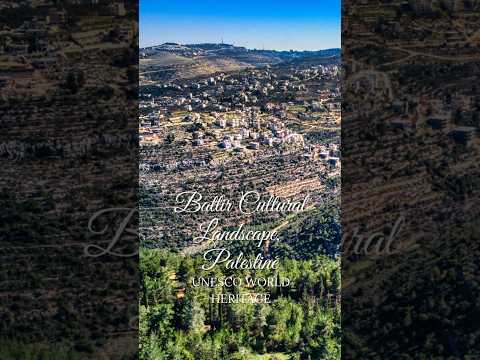
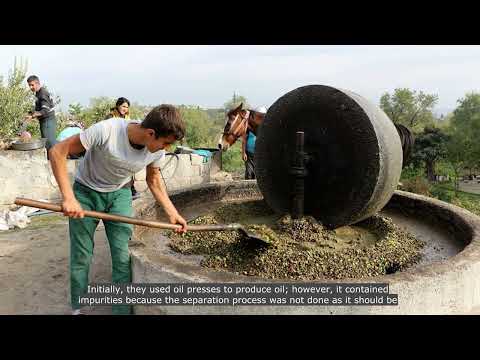
Battir is one of the clearest examples of heritage as a living landscape. It is not only a beautiful village scene. It is a system. Stone terraces, water channels, cultivated slopes, planted fields, olive trees, vines, and community knowledge all work together. The landscape is shaped by generations of human labor and environmental adaptation.
The importance of Battir comes from the relationship between people and land. The terraces are not decorative. They are practical, historical, and cultural. They help hold the soil, manage water, support agriculture, and preserve a form of rural life. The irrigation system reflects knowledge passed through families and communities. It shows that heritage can be made by farmers, not only by kings, armies, or architects.
This makes Battir extremely important for the website’s future structure. It can connect to articles about olive trees, village life, water, agriculture, land, food, family labor, and environmental memory. It can also connect to political geography because Palestinian landscapes are not neutral spaces. Land use, access, preservation, and movement are all part of the modern story.
Battir teaches a powerful lesson: a landscape can be an archive. Every terrace is a record of work. Every channel is a record of knowledge. Every olive tree is connected to time, harvest, patience, and family memory. This is why Battir belongs near the center of any serious Palestinian archive.
Hebron / Al-Khalil: old city, trade, sacred space, and urban continuity
Hebron / Al-Khalil Old Town brings the archive into the dense world of urban heritage. Unlike a single monument, an old city is a living fabric. Streets, markets, homes, religious buildings, workshops, stone facades, family names, trade routes, food practices, and daily movement all form part of the heritage story.
Hebron is connected to sacred geography, especially through the Ibrahimi Mosque / Tomb of the Patriarchs area, but its importance is wider than one religious site. It is also linked to commerce, old markets, glassmaking, ceramics, stone architecture, craft knowledge, and the social life of one of Palestine’s most important cities.
A strong Hebron archive page can later include several layers: religious history, market life, craft production, political geography, old city preservation, family histories, architecture, and contemporary challenges. It can also connect to a broader section on Palestinian cities, showing how urban heritage works differently from agricultural heritage or oral tradition.
Hebron reminds the reader that heritage is not always peaceful or easy to preserve. Old cities can be pressured by conflict, restrictions, economic change, population movement, and political division. That makes documentation even more important. A website like this can help preserve the visibility of places that are often reduced to headlines.
Ancient Jericho / Tell es-Sultan: deep time and the birth of settled life
Ancient Jericho / Tell es-Sultan gives the archive access to very deep historical time. It reminds visitors that Palestinian history is not limited to the twentieth century, the Nakba, or modern politics. The land contains archaeological layers that reach back to some of the earliest chapters of settled human life in the region.
The power of Jericho is that it connects archaeology to human imagination. People can look at ancient remains and ask basic questions: How did humans begin to settle? How did they organize water, food, walls, ritual, storage, and community? How did early villages become more complex places? These questions make Jericho useful not only for Palestinian history, but for human history.
For the website, Jericho can become a central historical gateway. It can connect to the Natufian period, Neolithic settlement, early agriculture, ancient trade, desert routes, monastic landscapes, Hisham’s Palace, the Jordan Valley, and modern Palestinian urban life. It can also connect ancient history with the present by showing continuity of place.
Jericho is especially valuable because it makes the archive feel larger than politics. Political history matters deeply, but a complete Palestine archive must also show archaeology, environment, agriculture, sacred geography, architecture, and the everyday human work of building communities across time.
Saint Hilarion Monastery / Tell Umm Amer: Gaza’s world heritage and the depth of coastal history
Saint Hilarion Monastery / Tell Umm Amer is one of the most important heritage topics for expanding the archive because it brings Gaza into the story through history, archaeology, and religious culture. Too often, Gaza is described only through war, siege, destruction, and humanitarian crisis. Those realities must be documented, but they are not the whole story.
Gaza has deep historical layers. It has been connected to trade routes, coastal movement, religious life, empires, agriculture, scholarship, and regional exchange. Saint Hilarion Monastery helps the archive show Gaza as a place of cultural depth, not only a place of suffering. This matters because cultural memory can be erased when a place is discussed only through disaster.
The monastery is connected to early monastic life and the Byzantine period. It gives readers a way to understand Gaza as a crossroads between Africa and Asia, between desert and sea, and between religious traditions and trade networks. It also creates future article opportunities about Gaza’s ancient history, archaeology, Christian heritage, coastal routes, and urban life.
The preservation of Gaza’s heritage is urgent. Cultural sites are vulnerable during conflict, neglect, environmental change, and political instability. When the archive highlights Saint Hilarion, it helps remind visitors that Gaza’s heritage belongs to human history, and that preserving it is part of preserving Palestinian memory.