Palestinian football has always carried a double meaning. On one level, it is a sport shaped by players, coaches, fixtures, stadiums, fans, goals, and competition. On another level, it is a form of public visibility. Every international match places Palestine on a scoreboard. Every flag in a stadium becomes a statement of identity. Every goal is felt not only as a sporting moment, but as a collective emotional event.
This is why football deserves a place inside the Palestine Archive. The game connects cities, refugee camps, diaspora communities, stadiums, young fans, and international platforms. It allows Palestine to be seen, heard, and represented in spaces where culture, politics, and sport meet.
Why this article matters
The archive already covers history, ancient civilization, Jerusalem, and cultural heritage. Football expands the project into a new field: modern popular culture. It shows that Palestinian identity is not only preserved in books, poems, monuments, and embroidery. It is also carried through chants, shirts, stadiums, match reports, goals, and the emotional rhythm of international competition.
The Asian Cup breakthrough
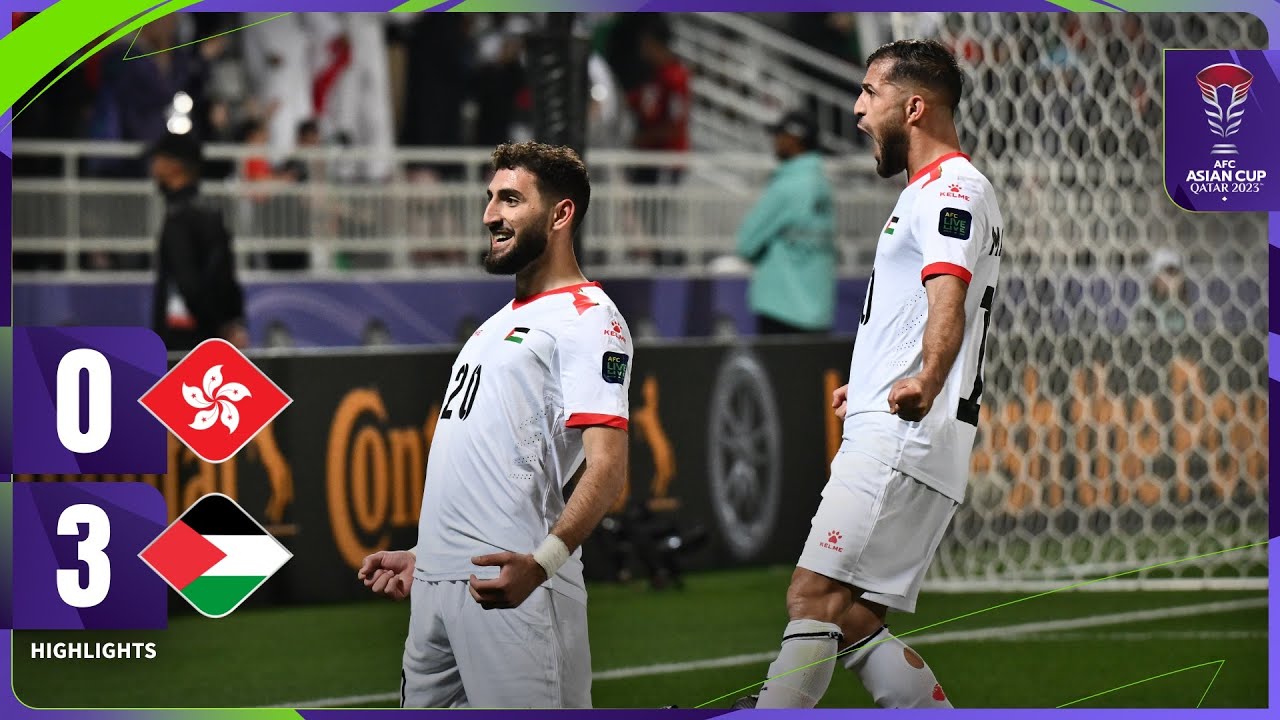
One of the most important modern moments in Palestinian football came at the AFC Asian Cup in Qatar. Palestine defeated Hong Kong, China 3–0 and reached the knockout stage for the first time in its Asian Cup history. According to the official AFC coverage, Oday Dabbagh scored twice and Zeid Qunbar also scored.
This result mattered because it changed the tone of the national team’s story. Palestine was not only participating; it was advancing. The team became a point of pride for Palestinians watching from the West Bank, Gaza, Jerusalem, refugee camps, Arab countries, Europe, the Americas, and the wider diaspora.
Archive Note
A football result becomes historically important when it enters collective memory. The 3–0 win did that because it turned a match into a shared national moment.
Football as identity
For many national teams, football is entertainment first and representation second. For Palestine, the balance is different. The national team carries a symbolic weight because many Palestinians experience fragmentation across borders, checkpoints, refugee camps, exile, and diaspora communities.
Football creates a rare shared space. A Palestinian in Ramallah, a refugee in Lebanon, a family in Jordan, a student in Europe, and a fan in Chile can all watch the same match, follow the same score, and feel part of the same public story.
This is why the national shirt, flag, anthem, and stadium visuals matter. They are not small details. They help transform the match into a cultural event.
Playing under pressure
Palestinian football operates under pressures that most national teams do not face. Players, staff, and supporters have often had to deal with travel restrictions, disrupted domestic competition, damaged infrastructure, and the emotional weight of events in Palestine.
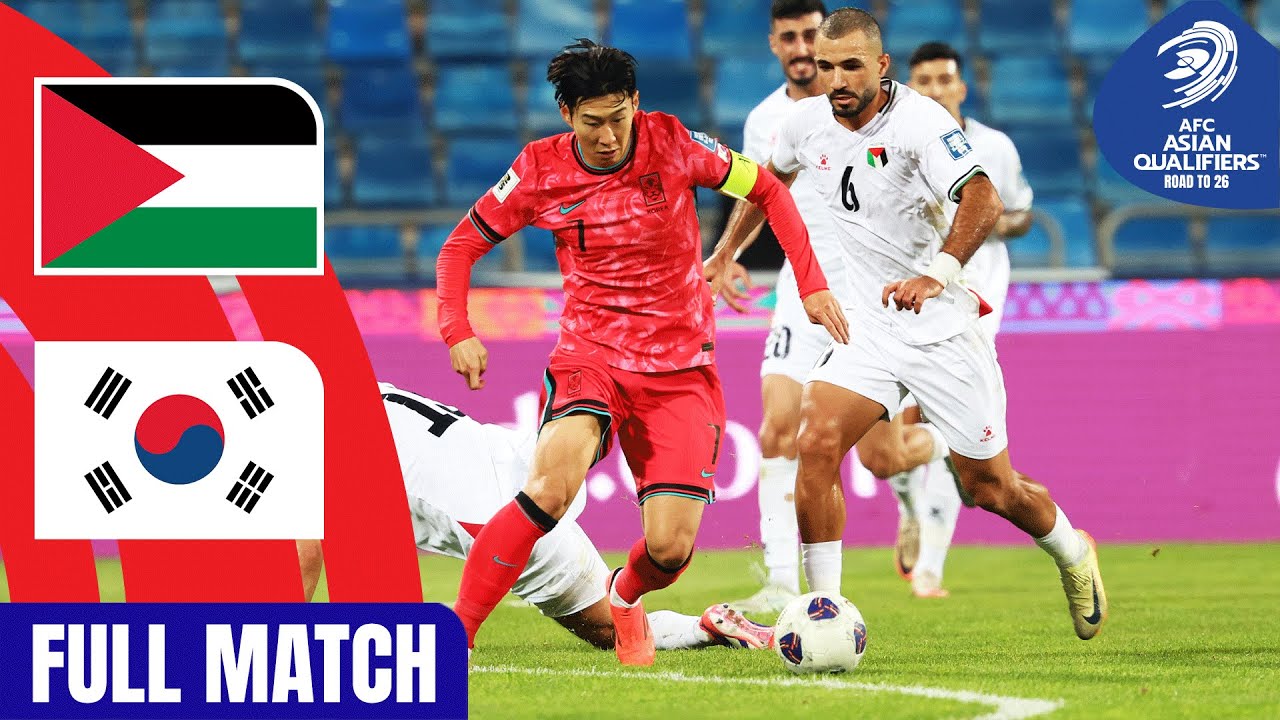
During the 2026 World Cup qualifying cycle, many matches were played away from Palestine. The 1–1 draw against South Korea, for example, was played at Amman International Stadium. Zeid Qunbar scored for Palestine before Son Heung-min equalized for South Korea.
Palestine later came close to continuing its 2026 World Cup qualifying dream, but the campaign ended after a late Oman penalty in a 1–1 draw. Even with that heartbreak, the team had already qualified for the 2027 Asian Cup, keeping the next stage of the story alive.